
The Salkantay tour or trek is one of the best alternatives to the Inca Trail for reaching Machu Picchu. This route combines breathtaking landscapes, a deep connection with nature, and passage through ancient Inca trails. If you’re looking for a challenging hike, this is the perfect option for you.
1. Salkantay
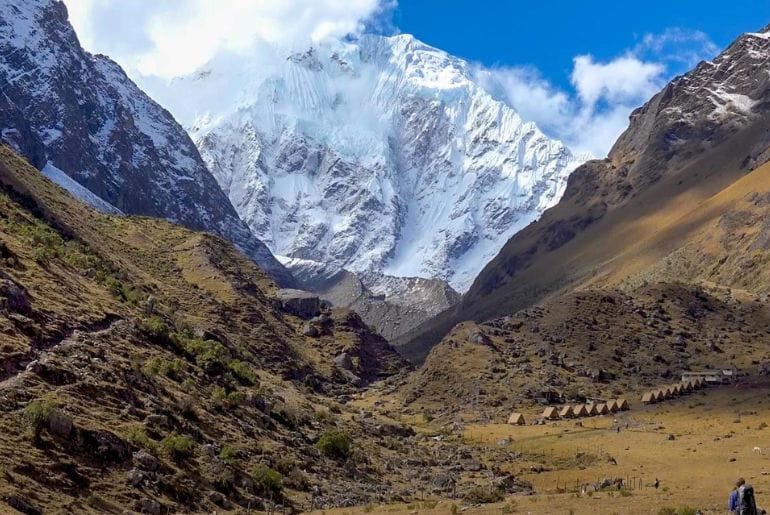
Salkantay is one of the most imposing mountains in the Peruvian Andes. Standing at 6,271 meters above sea level, this majestic snow-capped peak rises in the Vilcabamba mountain range and is considered a sacred mountain by local communities.
Meaning of Its Name
The name Salkantay comes from Quechua and means “Wild Mountain” or “Untamed.” Its snow-covered summit and towering presence have inspired countless myths and legends over the centuries.
Brother of Ausangate and Considered an Apu
Salkantay is considered an Apu, an Andean deity that protects communities and travelers along its paths. In the Incan worldview, it is the brother of Ausangate, another of the most significant snow-capped peaks in the Cusco region. Both are seen as guardians of the Andes and providers of water for the valleys below.
2. Location of Salkantay
Mount Salkantay is located in the Cusco region, within the province of La Convención, near the town of Mollepata. It lies within the Machu Picchu Historic Sanctuary, a protected area that preserves Andean biodiversity and landscapes.
3. Trekking Days
Now, let’s talk about the trekking itself. The Salkantay tour typically lasts between 4 to 5 days, depending on the chosen itinerary. The hike passes through various ecosystems, from snow-covered mountains to high-altitude jungle before reaching Machu Picchu. Below is the usual itinerary for a 5-day trek:
- Day 1: Cusco – Mollepata – Soraypampa
- Day 2: Soraypampa – Salkantay Pass – Chaullay
- Day 3: Chaullay – Sahuyaco Beach or Lucmabamba
- Day 4: The Beach – Hydroelectric Station – Aguas Calientes
- Day 5: Aguas Calientes – Machu Picchu – Cusco
Trekking Difficulty
The Salkantay tour is considered a moderate-to-difficult trek due to the long distances and high altitude. The most challenging section is the Salkantay Pass (4,650 m), the highest point of the route. However, with proper acclimatization and physical preparation, this experience is absolutely worth it.
Hiking Duration
Trekking days range between 6 to 10 hours per day, depending on the stage of the journey. The hike includes steep ascents and descents through valleys and archaeological sites such as Llactapata.
Landscapes and Villages Along the Route
One of the main highlights of the Salkantay tour is the diversity of landscapes encountered along the way:
- Humantay Lake: The famous turquoise lake you’ve probably seen on social media, located at the base of Humantay Mountain.
- Salkantay Pass: The highest and longest section of the trek, testing your courage and physical endurance—be prepared!
- High-Altitude Jungle: The transition zone between the Andes and the Amazon.
- Santa Teresa Hot Springs: A perfect place to relax after several days of hiking.
- Llactapata Archaeological Site: An Incan site where you can see Machu Picchu and Huayna Picchu from afar.
- Agricultural Terraces: Step-like structures built by the Incas to optimize farming on steep terrain, visible throughout the trek.
- Waterfalls: Natural cascades scattered along the route.
- Interaction with Local Communities: A chance to learn about traditional agriculture, including coffee harvesting and processing.
- Aguas Calientes: The town before Machu Picchu, where you’ll spend the final night before the grand visit.
4. Campsites
During the trek, travelers spend the night at designated campsites along the route. Some of the main campsites include:
- Soraypampa: The first campsite, offering breathtaking views of Humantay Mountain.
- Chaullay: A site surrounded by Andean mountains and lush vegetation.
- Santa Teresa: A campsite located near the relaxing thermal baths.
- Some tour operators also offer accommodations in glass domes or eco-lodges, providing a more comfortable experience while staying close to nature.
5. Tour Prices
The cost of the Salkantay tour varies depending on the travel agency, the services included, and your budget. Most tour packages include guides, meals, entrance fees, transportation, and camping equipment, although extras such as horse rentals or train transportation may have additional costs. In general, prices fall within the following ranges:
- Budget Tour: $180 – $250 USD, with basic services and standard campsites.
- Standard Tour: $250 – $350 USD, offering better services and equipment.
- Premium Tour: $400+ USD, featuring exclusive dome or lodge accommodations and gourmet meals.
6. Why Is Salkantay Worth Visiting?
The Salkantay Trek is one of the most breathtaking routes in the Andes and a less crowded alternative to the Inca Trail. It is perfect for those seeking an authentic and immersive experience in nature. Unlike the Inca Trail, no special permit is required to hike this route, making it more accessible while still offering stunning landscapes and a deep cultural connection to the Andean world.
Frequently Asked Questions About the Salkantay Tour
How long does the Salkantay tour last?
The tour typically lasts between 4 to 5 days, depending on the itinerary and the travel agency you choose.
Is the Salkantay Trek difficult?
Yes, it is considered a moderate to difficult hike due to the high altitude and long distances. The most challenging section is the Salkantay Pass (4,650 meters above sea level).
Do I need to acclimate before the tour?
Yes, it is recommended to spend at least 2 to 3 days in Cusco or similar altitudes to avoid altitude sickness.
What is the best time to do the Salkantay tour?
The best time is during the dry season, from April to October, when there is less rain, and the trails are in better condition.
How much does the Salkantay tour cost?
Prices vary depending on the agency and included services. Costs range from $180 USD to over $400 USD for premium options.
Where does the Salkantay tour begin?
The trek starts in Mollepata, about 3 hours by transport from the city of Cusco.
Is it necessary to hire a guide, or can I do it on my own?
It is possible to hike independently, but hiring a tour with a guide is recommended as the route is demanding, and agencies provide logistics, meals, and camping arrangements.
Do I need a special permit for the Salkantay Trek?
No, unlike the Inca Trail, a special permit is not required, but you must purchase the Machu Picchu entrance ticket.
How many hours do you walk each day?
It depends on the day, but on average, hikers walk between 6 to 10 hours per day.
Where do trekkers sleep along the route?
Hikers sleep in organized campsites with tents, though some agencies offer domes or lodges at certain points.
Can I rent a horse if I get tired?
Yes, horse rentals are available on some sections of the trail, particularly on the ascent to the Salkantay Pass.
How cold does it get on the Salkantay Trek?
Temperatures vary, but it can drop to -5°C (23°F) on the first night in Soraypampa. In the high jungle, the weather is warmer and more humid.
Are there bathrooms along the route?
Yes, basic toilets are available at the campsites, but facilities are limited along the trail.
What should I pack for the Salkantay tour?
Essential items include:
- Warm clothing
- Rain poncho
- Trekking boots
- Sunscreen
- Insect repellent
- Cash
- A comfortable backpack
Can I combine the Salkantay Trek with other experiences?
Yes! Many agencies offer add-ons like Humantay Lake, Santa Teresa hot springs, and activities like zip-lining to enhance your adventure.
Related posts
Things to Know About Hiking the Lares Trek
How to Make the Most of Your Day at Humantay
Practical Tips For Conquering The Salkantay Trekking
Lares Trek and Inca Trail: Comparison and Differences
Salkantay – The Highest Peak Of Vilcabamba
Humantay Lake Trek: A Day in the Andean Wild
Trekking Trip: Complete Packing List for an Overnight Hike
The Inca Royal Road: What You Didn’t Know About the Qhapaq Ñan