
If you’re planning a trip to Peru, you’re probably wondering: which tourist city is better to start with? Because, of course, there are two places that always come up: Cusco vs Arequipa. But if you don’t know much about Peru, here’s a quick heads-up:
Cusco is like the capital of the Inca world, full of history, ruins, and the base for visiting Machu Picchu, which is the country’s most famous spot.
Arequipa, on the other hand, is a city with a more relaxed vibe, surrounded by impressive volcanoes, mouthwatering food, and many unique natural landscapes.
So, whether you want to kick off your trip with a ton of culture and adrenaline, or prefer something more laid-back with amazing scenery, here’s everything you need to know about both destinations.
Location
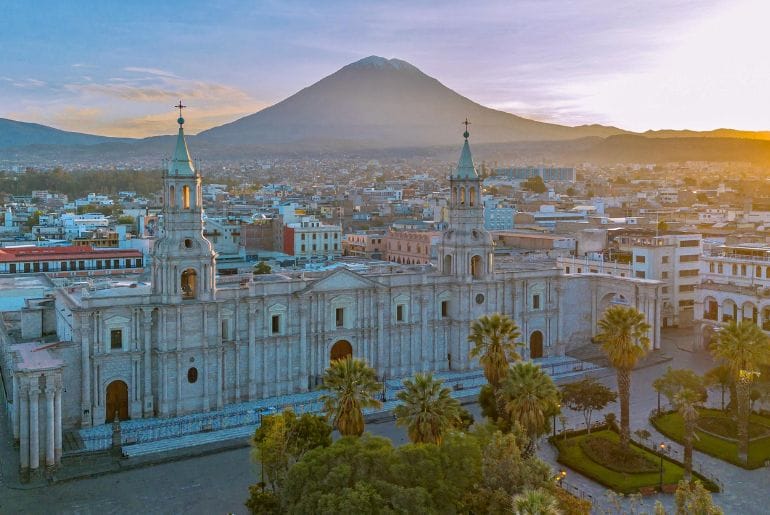
Arequipa, the White City of Peru
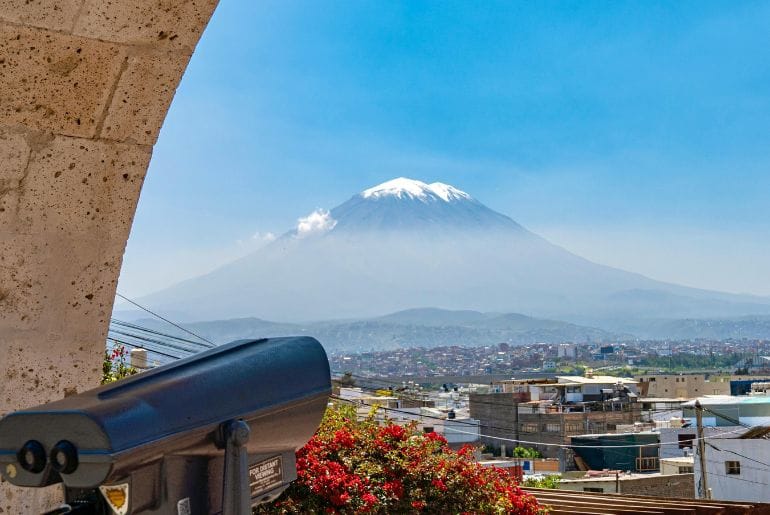
Located in the southern Andean region of Peru, Arequipa is known as the “White City” because of the characteristic color of its buildings made from sillar, a white volcanic stone. It’s the country’s second most populated city and sits majestically at the foot of three imposing natural guardians: the Chachani, Misti, and the snow-capped Pichu Pichu volcanoes.
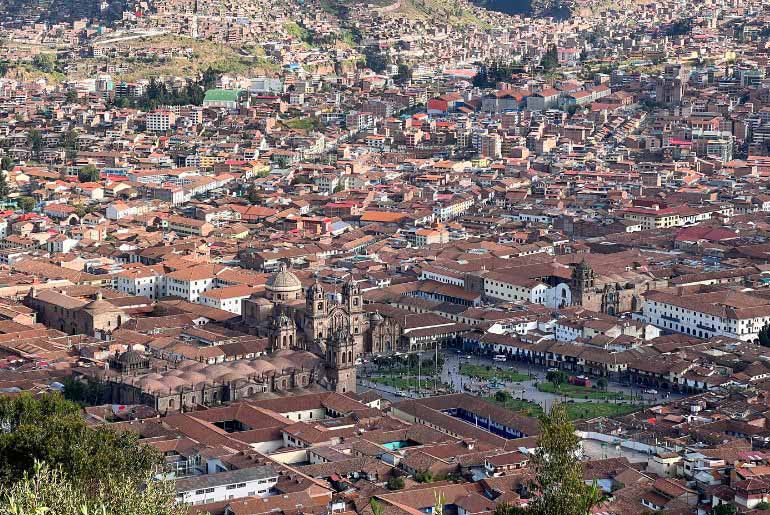
Cusco, The Heart of the World and Cradle of the Inca Empire
Tucked away in southeastern Peru, where the Andes rise with breathtaking majesty, lies Cusco — a city where history lives in every stone. Once the capital of the mighty Inca Empire and known for centuries as the “navel of the world,” Cusco is more than a destination; it’s an experience. Wandering its cobblestone streets feels like stepping back in time, with ancient walls whispering stories and a spiritual connection to the land.
Weather in Arequipa and Cusco: What You Really Need to Know
When you’re planning a trip or moving to a new city, the first thing you should check—before tours or restaurants—is the weather. Because you can’t escape it: it’s with you all day long.
Arequipa
- It’s sunny almost all year. Warm days, cool nights. Rain is rare, and when it shows up, it’s just a light drizzle between January and March. The air is dry, so stay hydrated and don’t skip the sunscreen.
Cusco
- Cold in the mornings and at night. Around midday the sun comes out, but don’t get too comfortable—it can change fast (depends on the season). From April to October, it’s dry with clear skies. From November to March, expect frequent rain.
Arequipa: How to Get There from Lima
Arequipa is located in the Andean region, in southern Peru, just over 1,000 kilometers from Lima. If you choose to travel by land, the bus trip from the capital takes approximately 16 hours. Prices vary depending on the company and type of service, usually ranging between S/100 and S/250.
You also have the option to fly. There are daily flights from Jorge Chávez International Airport in Lima to Rodríguez Ballón International Airport in Arequipa. The flight takes about one hour and is operated by airlines like LATAM Airlines and Viva Airlines. One-way prices typically start at around $35, though they can increase depending on the season and how far in advance you buy the ticket.
Cusco: How to Get There from Lima
Cusco is located in the heart of the Andes and is accessible by plane, bus, or even train (although the latter is mainly used to connect Cusco with nearby cities like Ollantaytambo or Machu Picchu). The bus trip from Lima takes around 23 hours, as you cover over 1,000 kilometers through mountainous and scenic roads.
If you want to save time and travel comfortably, the best option is flying. The flight lasts about 1 hour, with daily departures from Jorge Chávez International Airport (Lima) to Alejandro Velasco Astete International Airport in Cusco. Airfare prices can vary but average around $90 one way, depending on how early you book and the airline you choose.
Traveler tip: To find better prices on flights to Cusco, it’s recommended to book in advance. Often, booking weeks or months ahead can mean significant savings.
Where to Stay in Cusco and Arequipa?
Both Cusco and Arequipa offer a wide range of accommodations, from five-star hotels to more budget-friendly options, perfect for every type of traveler. Many of these hotels are strategically located in the historic centers of both cities, allowing you to enjoy the architecture, gastronomy, and local culture without venturing far.
Most accommodations offer single, double, matrimonial, or group rooms, blending colonial and modern styles. Additionally, many include services like 24-hour reception, free Wi-Fi, basic medical assistance, buffet breakfast, and even lunch or dinner that you can enjoy in cozy dining rooms or terraces with city views.
| Best areas to stay in Cusco | Best areas to stay in Arequipa |
| Plaza de Armas | Centro Histórico |
| Barrio de San Blas | Vallecito |
| Surroundings of the Temple of the Sun (Qoricancha) | Yanahuara |
| Barrio de San cristobal | Cayma |
Keep in mind that these areas are highly touristic, so prices may be higher, especially during peak season. However, there are always more affordable options if you book in advance.
Main Features of Arequipa and Cusco
| Arequipa: The White City | Cusco: The Imperial City |
| Arequipa rises 2,335 meters (7,661 feet) above sea level, tucked beneath the watchful gaze of the majestic Misti volcano.. Its altitude gives it a mild and sunny climate for much of the year. | Cusco is located at 3,400 meters (11,155 feet) above sea level. It’s a city where you’ll find history in every corner and was the capital of the Inca Empire, considered the “Navel of the World” for its geographical and spiritual importance. |
| Known as “The White City” because of its distinctive sillar stone—a white volcanic rock used in the construction of many temples, colonial mansions, and streets. This architecture gives the city an elegant and unique vibe. | The city is surrounded by towering snow-capped peaks like Ausangate and Salkantay, which not only offer breathtaking landscapes but are also part of world-renowned trekking routes. |
| The city is surrounded by beautiful countryside, crossed by the Chili River, where green fields, agricultural terraces, and rural landscapes blend against the stunning backdrop of the Chachani, Misti, and Pichu Pichu volcanoes. | Cusco is the starting point to visit one of the Seven Wonders of the Modern World: Machu Picchu. From here, you can also access other treasures of the Sacred Valley like Ollantaytambo, Pisac, and Moray. |
| Arequipa’s historic center is a UNESCO World Heritage Site, honored for its architectural wealth and historical importance. | Its cobblestone streets preserve traces of perfectly assembled Inca walls, over which colonial churches and mansions were built after the conquest. |
Top Traditional Foods You Have to Taste in Arequipa and Cusco
The cuisine of southern Peru is as diverse as its landscapes. Both Arequipa and Cusco offer a rich culinary experience full of flavors, tradition, and culture. Each dish tells a story, and every ingredient reflects centuries of Andean and mestizo wisdom. Here’s a list of the must-try foods from each city:
Arequipa: Intense Flavors with a Unique Identity
Arequipa has earned its reputation as one of Peru’s food capitals, and for good reason. Its cuisine is bold, flavorful, and rooted in strong Creole and mestizo traditions. Check out some of the signature dishes:
- Adobo Arequipeño: Pork marinated in chicha de jora and spices, slow-cooked. Perfect for breakfast.
- Caldo Blanco: A hearty soup with lamb, potatoes, and rice, very popular in rural areas.
- Rocoto Relleno: One of the most iconic dishes, stuffed spicy pepper filled with meat, served with a potato casserole.
- Chupe de Camarones: A creamy, filling shrimp stew with milk, egg, potatoes, and huacatay — a distinct herb from the Andes.
- Torrejas de Verduras: Fried vegetable fritters, usually served as a side or appetizer.
- Malaya Frita: Crispy, juicy fried pork, a staple in Arequipa menus.
- Mazamorra de Chuño: Andean dessert made with chuño negro (dehydrated potato).
- Papaya Ice Cream Arequipeña: Refreshing and traditional papaya ice cream.
- Te Piteado and Chicha: Local drinks you can’t miss—one alcoholic and the other with an ancestral flavor.
- Americano: Traditional dish offering a combination of many plates in one, great if you don’t know what to try first.
- Queso Helado: A delicious typical dessert from Arequipa.
Cusco: Ancestral Cuisine with an Andean Soul
Cusco’s gastronomy is deeply authentic. It’s based on native products like potatoes, corn, quinoa, and meats such as alpaca, lamb, or pork. The cuisine is nutritious, ceremonial, and closely tied to the agricultural seasons of the Andean calendar.
- Capchi de habas: A mild stew of broad beans, potatoes, cheese, and milk.
- Zara lawa (corn soup): Creamy, made with ground corn, potatoes, and cheese.
- Adobo cusqueño: Local version of adobo, cooked with pork, chili peppers, and chicha de jora.
- Chairo: Traditional soup with chuño, meat, and vegetables.
- Lechón al horno: Tender roasted pork usually paired with tamales or mote, a traditional corn dish.
- Chicharrón cusqueño: Fried pork, crispy on the outside, tender inside.
- Timpu: Traditional dish offering a combination of many ingredients in one: pumpkin, sweet potato, lamb, potatoes, corn, and yucca.
- Olluquito con charqui: A hearty stew prepared with olluco, a tuber from the Andes, and dried llama or alpaca meat.
- Quinoa soup: Nutritious, warm, and light, perfect for acclimating to the altitude.
- Cuy al horno: The most iconic dish, served whole and seasoned with Andean herbs like huacatay.
- Chiriuchu: Typical dish for Corpus Christi festival, with guinea pig, chicken, fried dough, cheese, seaweed (cochayuyo), and more.
- Chuño soup and chicken broth: Essentials for breakfast or to fight the cold.
- Crema de leche dessert: Traditional Cusco sweet with a delicate flavor and smooth texture.
Main tourist destinations in Arequipa
City Tour: Panoramic tour of Arequipa
Some travel agencies offer a panoramic bus tour of Arequipa that lasts about 4 hours. During this tour, you will visit the city’s most emblematic historical and architectural areas, as well as the best viewpoints.
Plaza de Armas
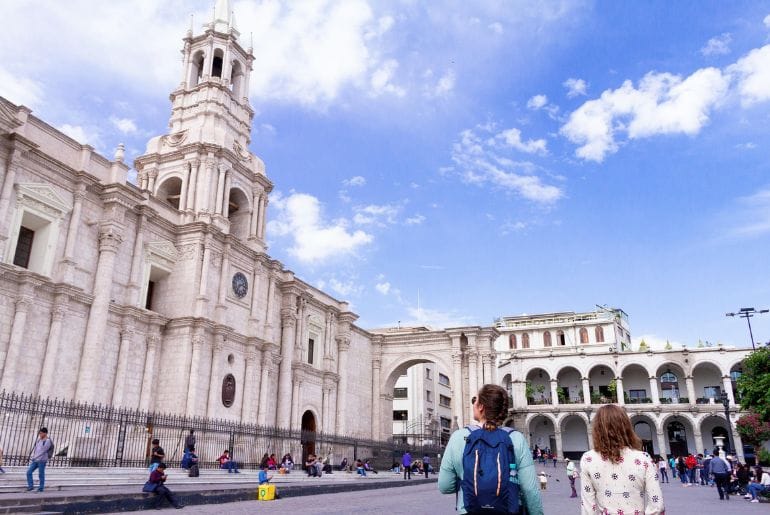
Start your tour at Plaza de Armas, considered one of the most beautiful squares in Peru. Here you can admire the majestic Arequipa Cathedral, surrounded by large porticoes. Don’t miss the Church and Cloisters of the Compañía de Jesús, a remarkable architectural masterpiece.
Arequipa Cathedral
Arequipa Cathedral, constructed entirely from white volcanic sillar stone, stands out with its Neo-Renaissance Gothic architecture. If you want, you can visit its museum to learn more about the history of the cathedral and the city.
Monastery of Santa Catalina
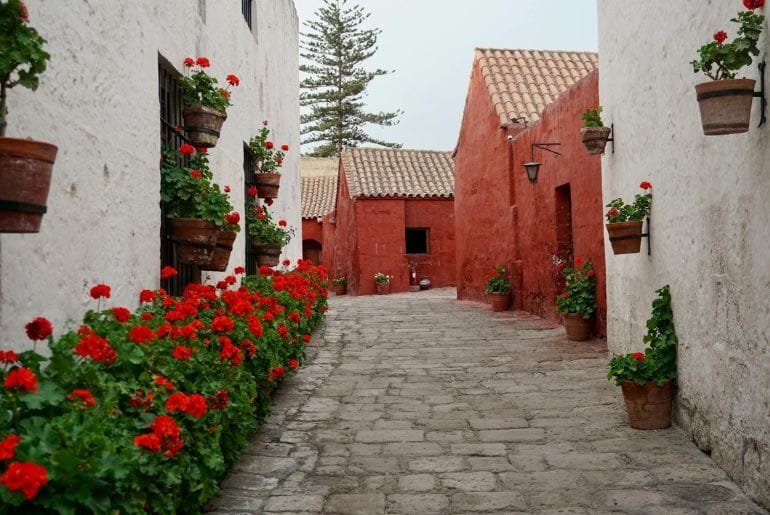
Known as “a city within a city,” the Monastery of Santa Catalina was constructed with sillar and, despite earthquake damage, retains its charm with unique architecture.
Carmen Alto Viewpoint
From Carmen Alto Viewpoint, you will enjoy a spectacular panoramic view of Arequipa. You can also take part in activities such as ziplining, buy local crafts, and visit the small Paul Timing museum.
Church and Cloisters of the Society of Jesús
This monument is one of the main examples of Arequipa’s architectural school. The cloisters feature two large courtyards with arcades, and the first one stands out for its Baroque style.
Santuarios Andinos Museum
This museum, just a block away from Plaza de Armas, preserves the famous mummy Juanita—the “Lady of Ampato”—who was sacrificed on Ampato volcano’s summit during the Inca era and uncovered in 1995.
Yanahuara Viewpoint
The Yanahuara Viewpoint is a set of beautiful sillar arches offering impressive panoramic views of the city. Another spot to explore is the Yanahuara neighborhood, famous for its tight cobblestone streets and old sillar houses.
Incalpaca Mini Zoo
The Incalpaca Mini Zoo is a clothing store offering products made from alpaca and vicuña wool, and includes a small free zoo where you can see the four types of South American camelids: llama, alpaca, vicuña, and guanaco.
Sabandía Mill
The Sabandía Mill is a historic water mill that is still operational and open for visitors to see its mechanism in action. At the same site, you can also enjoy activities like horseback riding, ATV tours, ziplining, and tasting typical Arequipa food.
Pillones Waterfall
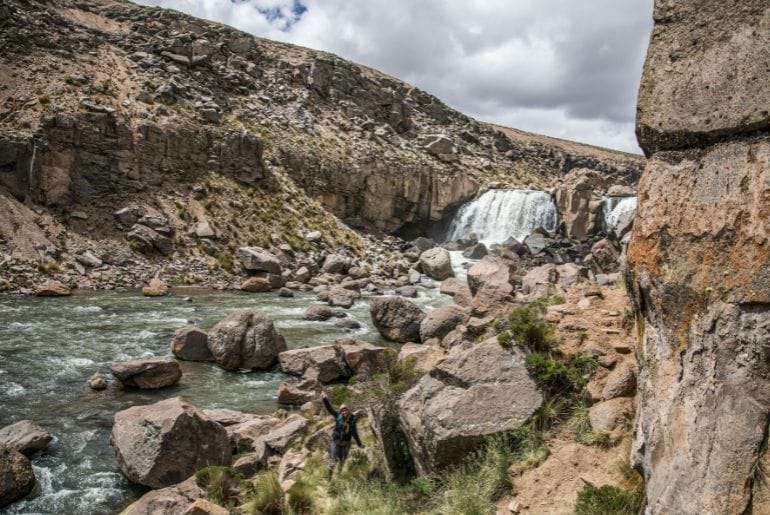
Located at 4,600 meters above sea level, the Pillones Waterfall is one of the most impressive natural treasures in the Arequipa region. This area stands out because of its rocky environment, where centuries of water and wind erosion have carved the stones into unique shapes. The waterfalls crash powerfully between unique rock formations, creating a perfect atmosphere.
Imata Stone Forest
Just 150 km from Arequipa, the Imata Stone Forest is among the region’s most captivating and puzzling geological formations. This incredible landscape is made up of a collection of rocks formed by ignimbrite, a volcanic material that comes from the sedimentation of currents of volcanic material, causing the stones to fuse together, creating a solid and resistant structure.
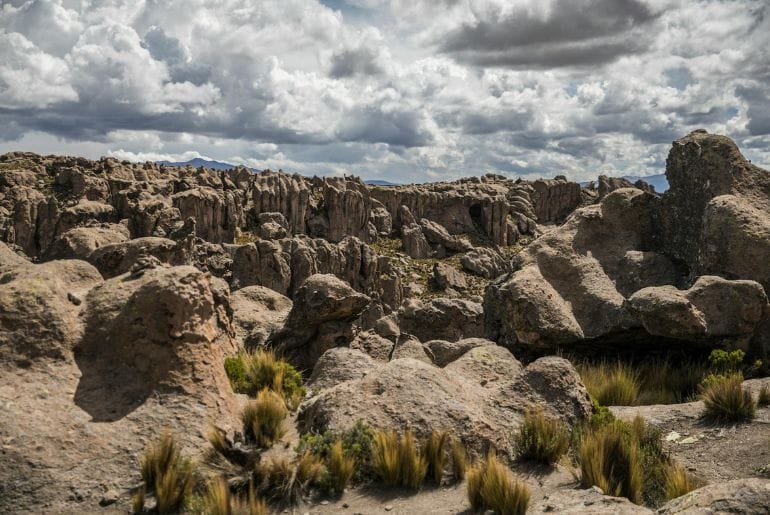
What’s fascinating about this place is that over thousands of years, erosion from wind and water has sculpted these rock formations in such a unique way that many resemble prehistoric animals, human faces, monsters, Andean birds, and even mythological figures. It’s like a giant outdoor “natural museum,” where every stone tells a story about nature and the passage of time.
Colca Canyon (Cross of the Condor Viewpoint)
At about 3,600 meters above sea level, near the Ampato and Sabancaya volcanoes, lies the Colca Canyon, one of the most impressive geological formations in the world. Formed over thousands of years by the Colca River, this canyon stretches down to approximately 4,160 meters, making it one of Peru’s deepest.
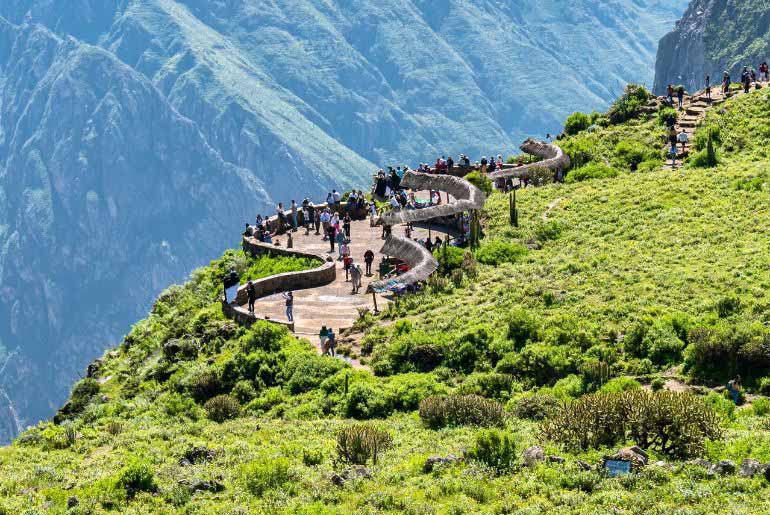
Within this spectacular landscape is the Cross of the Condor Viewpoint, a strategic spot to enjoy panoramic views of the canyon and, most impressively, the majestic flight of the condors—emblematic birds of the region. The viewpoint gets its name not only from the cross built by locals but also because it has become the perfect place to observe these impressive animals in their natural habitat.
Virgin Gorge of Culebrillas
The Virgin Gorge of Culebrillas is another fascinating destination in the region, formed thousands of years ago by water and wind erosion. This canyon, stretching about 4 kilometers, is known for its mystery and unique beauty.
What makes this place special is the predominance of pink sillar, a volcanic rock uncommon in the area. Additionally, along the gorge, you can find numerous petroglyphs—pre-Inca figures representing amorphous and humanoid shapes that belong to the ancient Wari culture.
Añaswayq’u Quarries
These quarries showcase the impressive skill and ingenuity of the people who once lived in the area. These massive volcanic rock formations, some reaching up to 30 meters in height, were carved using simple tools like hammers and chisels.
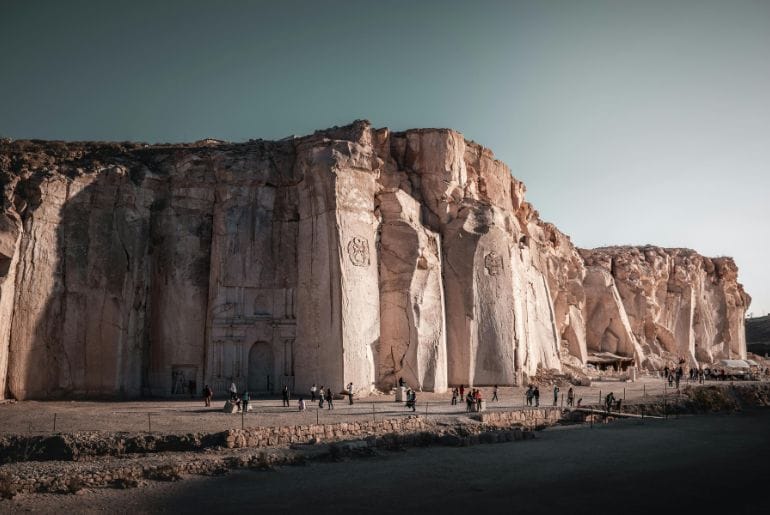
Here, you can observe a variety of shields, small sculptures, and other worked pieces, which testify to the detailed and precise craftsmanship carried out on the stone.
Main tourist destinations in Cusco
City Tour
If you’re looking for a convenient way to explore the city, some travel agencies such as: Rainbow Mountain Expeditions, offer a guided City Tour lasting about 4 hours. During this tour, you’ll visit the main archaeological complexes surrounding the city, including:
- Sacsayhuamán: A ceremonial and administrative center known for its massive stone constructions, showcasing the advanced engineering skills of the Incas.
- Qenqo: A revered location where the sun, moon, and stars were honored through sacred rituals. This mysterious place connects you with the spirituality of Inca culture.
- Puka Pukara: An Inca fortress which doubled as a resting place and lodging for both travelers and the Inca.
- Tambomachay: Known as the “Inca Baths,” a site full of history and mystery that reveals the Incas’ advanced knowledge of water management.
Remember, to enter these sites you’ll need the complete or partial Tourist Ticket (Boleto Turístico). Don’t know what that is? Don’t worry! We cover all the details about Cusco’s Tourist Ticket in the next post: Cusco Tourist Ticket Explained (Boleto Turístico)
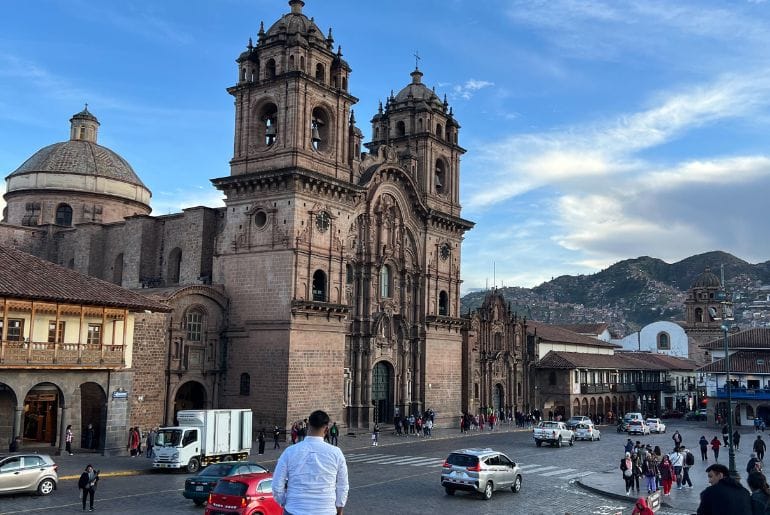
Plaza de Armas of Cusco (Main Square)
It’s undeniable — the Plaza de Armas in Cusco is one of the most captivating places in all of Peru. It’s not large or modern, but it has its own charm—just like its history. You can stroll through the plaza and admire the Cusco Cathedral with its grand portals, or the Church of the Society of Jesus, with such intricate details that make you wonder how they did it.Everything here was built on what used to be the center of the Inca world.
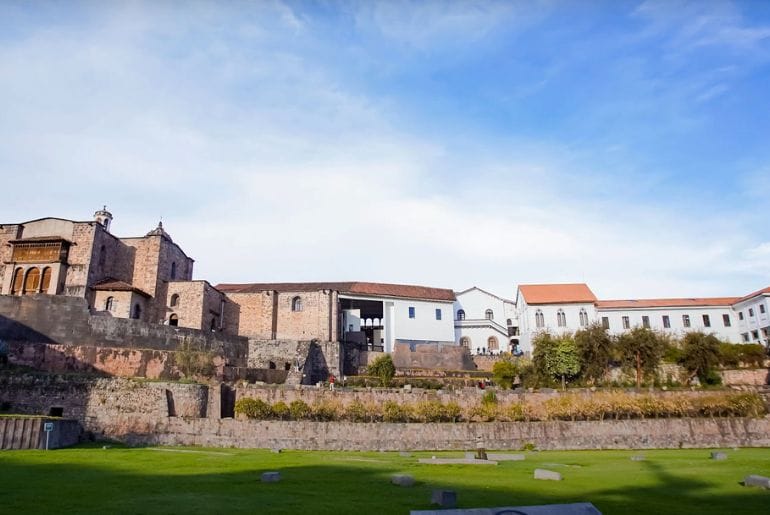
Qorikancha (Temple of the Sun)
Qorikancha, or the Temple of the Sun, was the most revered site in the Inca Empire, regarded as the cosmic center of their world. Everything here was covered in gold (literally), and it was a sacred place where the sun, moon, and stars were worshiped. Today, the Convent of Santo Domingo stands atop the Inca temple, built by the Spanish over the original Inca walls. What’s impressive is that despite the earthquakes that have struck the region, the Inca walls remain intact.
Valle Sur (The South Valley)
The South Valley circuit is the perfect plan if you’re looking for something calm but full of surprises. Just an hour from Cusco, you’ll enter a greener, more rural landscape, yet just as rich in history as the city center. This route will take you through fascinating sites that reflect the greatness of pre-Inca civilizations and the legacy of the Incas.
- Tipón: boasts impressive terraces and water channels, archaeological marvels that remain fully functional since Inca times. It’s amazing to see how Inca hydraulic engineering remains intact and operational.
- Pikillaqta: An ancient pre-Inca city of the Wari culture, known for its impressive size and order, showcasing the advanced architecture and urban planning of this civilization.
- Raqchi: A monumental complex that houses a giant temple dedicated to the god Wiracocha, one of the most important deities in Inca culture. The scale of this temple will leave you speechless.
Sacred Valley of The Incas
The Sacred Valley is one of Cusco’s most iconic destinations, filled with archaeological complexes, stunning landscapes, and a rich history. Here you can explore the main archaeological sites that were centers of great importance for the Incas, such as:
- Ollantaytambo: It was a ceremonial, military, religious, and agricultural center. Its majestic agricultural terraces and fortress ruins will leave you amazed, along with spectacular views of the valley.
- Pisac: Famous for its impressive agricultural terraces and mountain tomb complexes, Pisac also has a local market where you can find traditional handicrafts.
- Moray: This site consists of circular terraces that, according to some studies, functioned as an agricultural laboratory. The different terrace altitudes allowed experiments with various crops adapted to different climates.
- Maras: Known for its salt mines, these are over 3,000 salt pools still operated today by local inhabitants.
- Chinchero: Here you can admire the Palace of Tupac Yupanqui, one of the great Inca emperors. Also, its large Inca wall with 10 trapezoidal niches showcases the art and architecture of the time.
Reminder: All these sites are included in the Tourist Ticket, except for the Maras Salt Mines.
Machu Picchu:
Just over 100 km from Cusco, Machu Picchu sits high in the Andes, accessible by train following the Urubamba River or via several hiking trails crossing towering mountains. Surrounded by peaks and valleys, it offers breathtaking scenery.
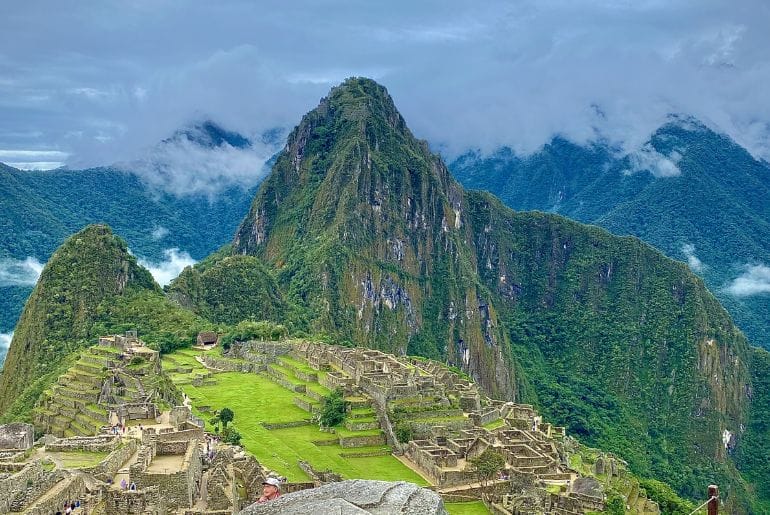
Machu Picchu is one of the greatest achievements of the Inca Empire—a civilization remarkably advanced for its time and admired worldwide. The Incas believed this site was chosen by the cosmos as a sacred place, serving as an administrative, educational, political, and religious center. It was abandoned about 100 years after its construction and remains one of the most awe-inspiring tourist destinations globally.
Inside Machu Picchu, you’ll find a wealth of Inca structures, including terraces, stairways, ramps, and finely carved stones that showcase their mastery of engineering. Some of the most famous structures include:
- Temple of the Sun: A sacred site that reveals the Incas’ deep connection to the sun, the center of their worldview.
- Main Temple: Located around the Sacred Plaza, it is one of the most important buildings in the complex.
- Temple of the Three Windows: Known for its impressive windows that open up to incredible vistas.
- Inti Huatana: A solar clock used by the Incas to measure the sun’s movement and mark astronomical events.
- The Sacred Rock: A monument reflecting the Incas’ relationship with the earth and cosmos.
- Huayna Picchu Mountain: The towering mountain behind Machu Picchu, famous for its panoramic views of the entire complex.
- The Three Gateways: A monumental entrance leading to sacred areas within the site.
- Temple of the Condor: A site linked to the worship of this majestic Andean bird.
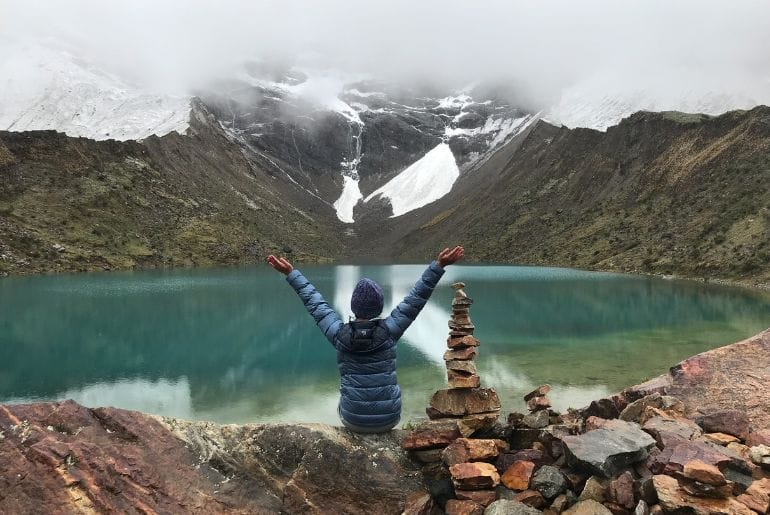
Humantay Lake
Situated over 4,200 meters above sea level, Humantay Lake is an awe-inspiring natural attraction formed by the melting glaciers of Nevado Humantay, part of the Vilcabamba mountain range. This lake stands out for its unique and mesmerizing color, caused by the minimal aquatic flora in its waters, giving it an almost otherworldly hue—hard to describe but easy on the eyes.
Rainbow Mountain
The Rainbow Mountain, or Montaña de los 7 Colores (Cerro Colorado), located above 5,000 meters in the Vilcanota range, is one of Peru’s most iconic tourist spots. Known for its natural layers of vividly colored earth, it looks like a giant rainbow painted across the rugged landscape, surrounded by breathtaking features like the Red Valley and the snowy peak of Ausangate.
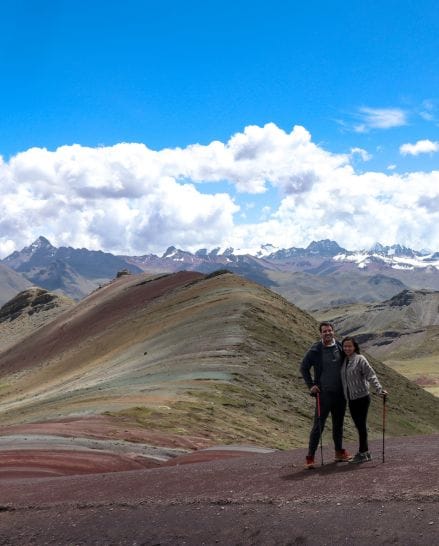 Alternative Rainbow Mountain Wilcacunca
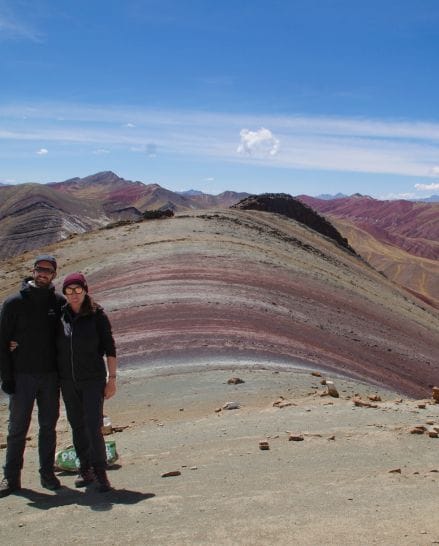 Alternative Rainbow Mountain Palccoyo
While Vinicunca’s Rainbow Mountain steals the spotlight, other colorful mountains like Wilcacunca and Palccoyo offer equally stunning, and sometimes less crowded, alternatives. These geological wonders arise from the same mineral-rich soil that creates those spectacular bands of color—nature’s own masterpiece in high altitude.
Ausangate
Ausangate is one of the highest mountains in Peru, towering over 6,300 meters above sea level. But beyond the impressive height, what truly makes it majestic is its energy. The local communities don’t see it as just another snow-capped peak—they revere it as a sacred spirit. It’s like the chief of the mountain tribe, the wisest and most respected of them all.
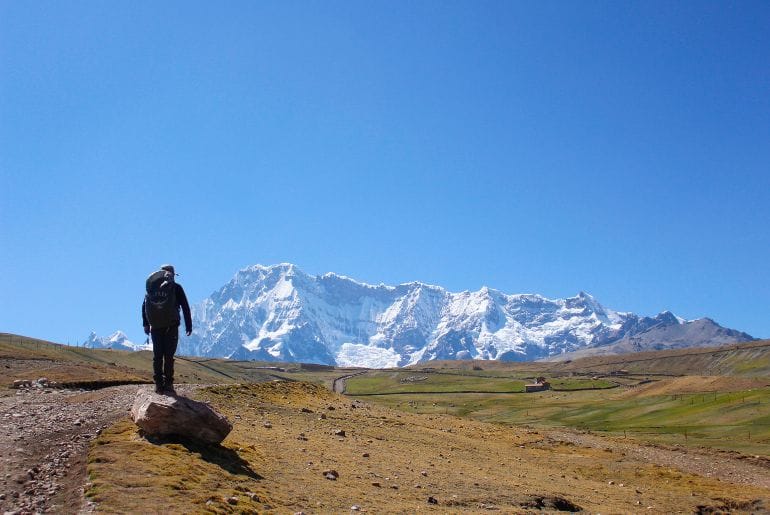
It’s famous for being part of a circular trek that surrounds the mountain, taking travelers through landscapes that seem from another planet: impossibly colorful lagoons, massive glaciers, reddish mountains, and villages that appear frozen in time.
Salkantay
Salkantay is a sacred mountain in the Vilcabamba range near Cusco. Rising over 6,200 meters high, it’s considered one of the most important mountains in Andean cosmology. For the ancient Incas, it was an Apu—a protective spirit—like Ausangate but with its own personality: more warrior-like, more fiery.
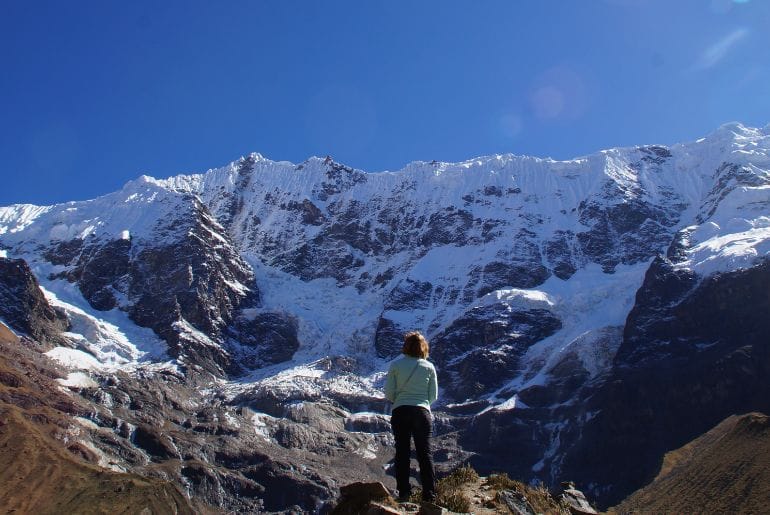
Today, Salkantay also lends its name to one of Peru’s most famous trekking routes: the Salkantay trek to Machu Picchu, a challenging and breathtaking alternative to the classic Inca Trail.
Choquequirao
Choquequirao sits at around 3,050 meters (about 10,000 feet) above sea level. It’s Cusco’s best-kept secret—though more and more travelers are beginning to uncover it. This stunning Inca city is just as majestic as Machu Picchu, but far more remote. The trek to reach it isn’t easy, and that’s exactly what keeps the site so untouched and pristine.
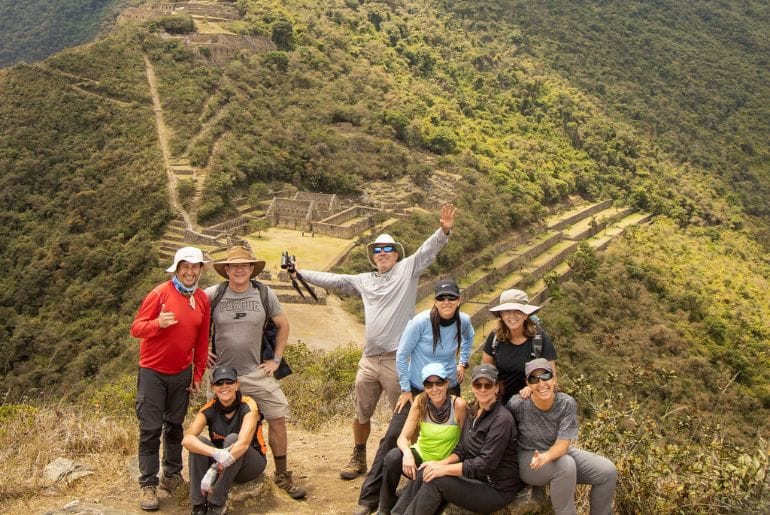
What makes Choquequirao especially fascinating is that it hasn’t been fully excavated yet, so much of it still remains a mystery. The panoramic views from the site are absolutely breathtaking, and its agricultural terraces and ancient structures continue to reveal clues about how advanced the Inca civilization truly was.
Related Posts:
The Ultimate Travel Guide to Rainbow Mountain, Cusco, Puno, and La Paz, Bolivia
Myths About The Andean Condor
Legends and Myths of the Origin of the Inca Empire
The Most Instagrammable Spots in Cusco
The Best Time to Visit Cusco, Peru