
If you’re planning a trek in Cusco, Peru, sooner or later you’ll face a big decision: should you go for camping or glamping? Which option is better—and which one offers the best views and experiences?
Don’t worry, we’ve got your back! We’re here to help you figure out which of these two adventures is the perfect fit for you.
To make your decision easier, we’ll break down the essentials: the real differences between camping and glamping, comfort levels, overall experience, prices, and—most importantly—how each option impacts your relaxation and sense of adventure.
What is camping—and what is glamping?
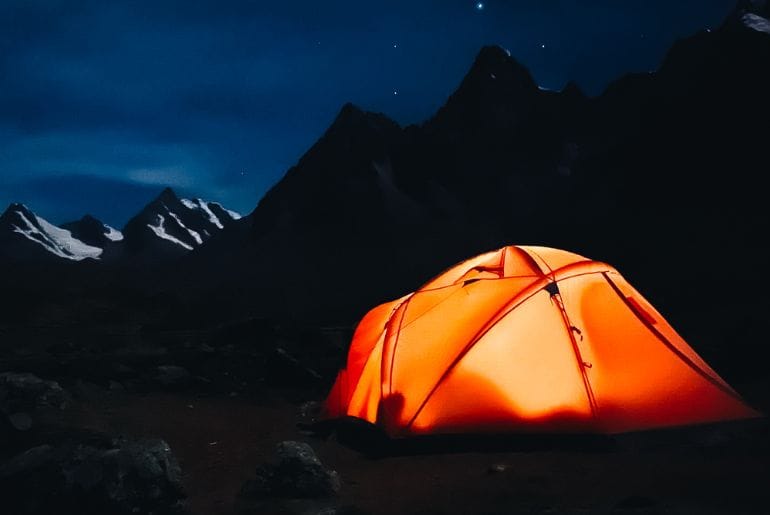
Traditional Camping: It’s an exciting outdoor activity where people escape the city to reconnect with nature and sleep under the stars. You pitch your own tent, sleep on a mat or in a sleeping bag, and eat meals that you either cook yourself or that your tour guide prepares.
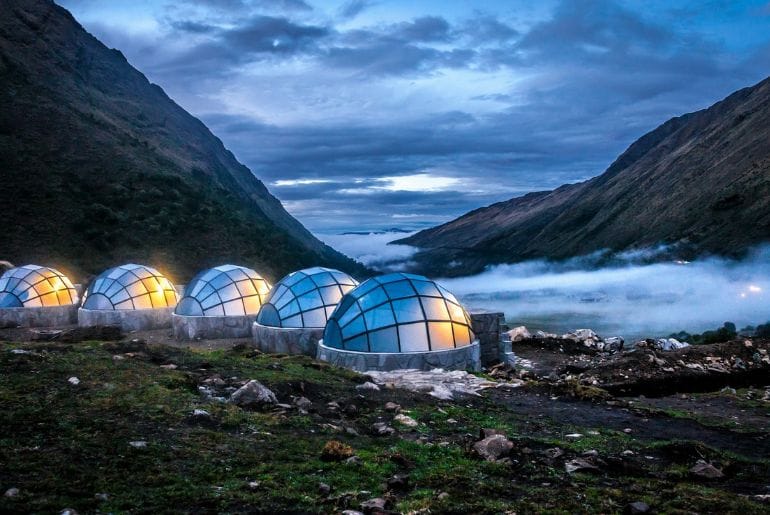
Glamping (Glamorous Camping): It’s basically camping—but with all the comforts of a hotel, right in the heart of nature. Think real beds, cozy geodesic domes with stunning views, heating, private bathrooms, and restaurant-quality meals.
Comparative table: Glamping vs Camping
| Feature | Traditional Camping | Luxury Glamping |
| Accommodation | Basic tent, mattress and sleeping bag | Geodisc domes or luxury tents with real beds and heating |
| Comfort | Basic: Cold, possible humidity | High: Beds, Heating, Fleeces, plugs and even Wi-fi |
| Meal | Prepared on a stovetop or portable cooktop | Gourmet dishes prepared by local chefs |
| Bathrooms and Showers | Basic or null (nature itself) | Private or shared bathrooms with hot shower |
| Experience | Authentic and immersive, fully connected to nature | Comfortable and memorable for those seeking nature without sacrificing comfort |
| Ideal For | Adventurers | Couples and families. |
| Price | It is usually cheap | High prices |
Recommended Routes for Glamping
Salkantay Trek (5 Days): This is one of Peru’s best glamping routes. The geodesic domes along the Salkantay route are located in Soraypampa, at 3,910 meters (12,828 feet) above sea level. From there, you’ll enjoy breathtaking views of Apu Salkantay. The domes come fully equipped with deluxe beds, private bathrooms, and hot showers.
Inca Trail: Another standout route for glamping—with a twist. Campsites on the Inca Trail are carefully assigned and managed, which means you have to stick to the designated spots for pitching your tent.
While the Inca Trail doesn’t feature fixed glamping domes like Salkantay, some travel agencies offer high-end camping setups that get pretty close: think inflatable mattresses, VIP-style dining tents, and all the creature comforts you’d never expect out on the trail.
Sacred Valley / Sky Lodge: Perched high above the majestic Sacred Valley of the Incas, this once-in-a-lifetime experience places you in a transparent capsule clinging to a cliffside—about 400 meters (1,300 feet) above the ground.
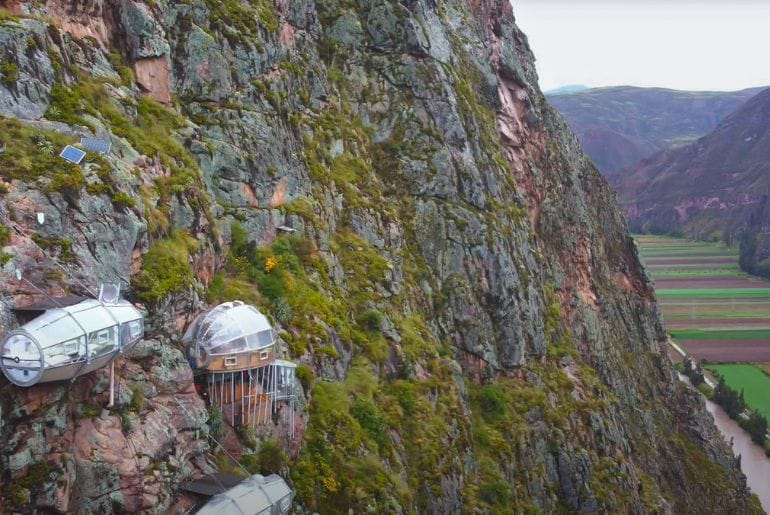
You’ll sleep suspended in the air with jaw-dropping views and the surreal feeling of being literally on top of the world. (Not for the faint of heart—or those afraid of heights!)
Maras / Mountain View Experience: Just outside the Sacred Valley, in the scenic Maras region, you’ll find a cozy A-frame cabin built with traditional Andean materials.
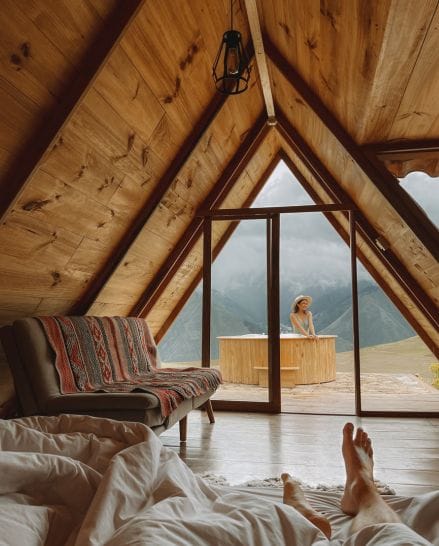
Here, you can soak in panoramic views of the Sacred Valley, all from a warm, rustic retreat that blends beautifully with the natural surroundings.
Recommended Routes for Camping and Trekking
Here are some routes that give you the chance to experience camping firsthand:
Ausangate Trek (5–6 Days)
This classic trek is a must for serious hikers. It’ll push your physical limits and, at times, have you questioning whether spending more than five days trekking through the Peruvian highlands was such a great idea… until you see the views.
Ausangate is considered one of the most extreme treks in Peru, reaching altitudes of up to 5,200 meters (17,060 feet) above sea level.
Campsites along the route vary depending on the travel agency you go with—but no matter where you stay, you’ll be rewarded with jaw-dropping views of snow-capped peaks and untouched natural beauty and don’t miss the chance to unwind in the Pacchanta hot springs at the end—pure magic if you’re into natural relaxation.
Salkantay Trek (5-6 Days)
If you thought glamping was the only way to experience Salkantay, think again. Camping is also an option—but only in designated areas set by the travel agency you book with.
The biggest difference compared to glamping? At the campsites, you’ll be much more immersed in nature. It’s genuine, rugged, and perfect for those wanting a more meaningful outdoor experience.
Choquequirao Trek
This hidden gem is on track to become one of Peru’s most popular treks—possibly even rivaling the legendary Inca Trail or the Salkantay route. Most hikes take six days or more, and while it’s not quite as extreme as the Ausangate Trek, it will definitely challenge your endurance.
What makes Choquequirao stand out? It offers perfect spots to pitch your tent, surrounded by lush green landscapes and the peaceful soundtrack of the Apurímac River flowing nearby.
Vilcabamba
One of the furthest and most off-the-beaten-track routes to Machu Picchu—but honestly, it’s so worth it. You’ll be off the grid for over six days, fully immersed in nature, living like a true adventurer.
Lares Trek (4 days)
The best part about the Lares Trek? It only takes four days—perfect if you want a taste of camping under a starry sky, surrounded by breathtaking landscapes and towering mountains.
And to top it all off, don’t miss a soak in the warm Lares hot springs. It’s the best way to conclude your hike.
Huchuy Qosqo
Yes, you can camp at Huchuy Qosqo—but be ready for a very rustic experience. There are no designated campsites or services, so you’ll need to bring everything with you: your tent, food, water… and of course, leave no trace.
The best spot to set up camp is just before reaching the ruins, on a flat area nearby.
Important Tips for Respectful Trekking and Camping
- Camping is not allowed inside the ruins—out of respect for this incredible cultural heritage.
- If you’re trekking independently, it’s always best to ask permission from local communities before setting up camp.
- Leave every place better than you found it—that’s the golden rule of responsible travel.
- Do your homework! Make sure to research and understand the rules before embarking on any of these adventures.
- Remember, some sites—like the Inca Trail—require permits to hike, so plan ahead.
How to Choose Between Camping and Glamping?
| Go for camping if: | Go for glamping if: |
| You’re into simplicity, real-life adventure, and want to unplug completely for a while. | You love traveling in style, sleeping cozy and warm, and enjoying delicious food—without giving up those amazing nature vibes. |
| Saving money matters and you want a truly authentic experience. | You’re with a partner or family and want to share the adventure without freezing your toes or sacrificing comfort (dry baths included!). |
| You don’t mind roughing it a bit for closer contact with nature. | You want a premium, hassle-free experience while soaking in Peru’s most epic landscapes. |
And why not both?
A lot of travelers opt for the best of both worlds: camping for the first few days to get close to nature, then wrapping up the trip with a celebratory night of glamping—comfort and style to toast your adventure.
Conclusion
Whether you prefer to sleep beneath the gentle murmur of the river or in an elegant dome overlooking the snow-capped peaks, Peru always has something magical to offer. The important thing is not where you decide to stay, but that you dare to go out, to walk among mountains that seem to touch the sky, to fill your lungs with the purest air, and feel your soul expand to the imposing rhythm of the Andes. Because there, in that deep connection with nature, you discover the true greatness of the world and your own.
Ready for your next adventure?
We’re here to help you find the perfect route, the ideal operator, or the style that best fits your budget and that restless spirit that drives you to discover. Don’t hesitate to leave us a comment or contact us directly; together we’ll create a plan tailored to you, because every trip deserves to be unique.
Related Posts:
How To Pack For An Overnight Trekking Trip
How to Prepare for High-Altitude Trekking in Peru
The Inca Trails: Best Routes for Trekking
Things to Do in Cusco for Adventure Lovers