
Altitude affects everyone differently. Two guests can walk side by side on the same trail, reach the same elevation, and experience completely different physical responses. That is why professional monitoring is not optional in the Andes. It is essential.
When we guide a rainbow mountain hike or operate a full Rainbow Mountain, our responsibility goes far beyond leading the route. We actively observe, assess, and respond to subtle signs of altitude stress long before symptoms become serious.
Professional altitude monitoring is a continuous process. It begins before the trek starts and continues until every guest has safely returned. Here is how we do it.
Understanding Altitude Stress
At higher elevations, oxygen pressure decreases. The body compensates by increasing breathing rate and heart rate. Most guests adapt gradually, especially when itineraries are structured properly. However, altitude stress can develop when the body struggles to adjust.
Routes such as rainbow mountain climb rapidly to significant heights. Even well-conditioned travelers can feel the effects.
Altitude stress does not always appear dramatically. Early symptoms are often subtle. That is why trained observation matters.
Pre-Trek Assessment
Monitoring begins before we take the first step.
When guests arrive for a Rainbow Mountain Day trip from Cusco or a multi-day program, we assess several factors:
- Arrival timing in Cusco
- Previous altitude exposure
- Hydration levels
- Sleep quality
- Reported headaches or nausea
If a guest recently arrived and has not completed moderate day trips for acclimatization, we may adjust pacing or recommend a modified approach.
During a Sacred Valley Trip, we observe how each participant responds to moderate elevation before advancing to higher terrain. This step provides valuable baseline information.
Continuous Visual Observation
Professional guides rely heavily on visual cues.
On a rainbow mountain day trip, we watch posture and gait. Slower foot placement, imbalance, or unusual pauses can indicate early fatigue or dizziness.
Facial expression is another indicator. A guest who becomes unusually quiet or withdrawn during a rainbow mountain ascent may be experiencing discomfort but hesitating to speak up.
We also monitor breathing patterns. Rapid, shallow breathing that does not stabilize during short pauses may signal strain.
These observations happen constantly and quietly. Guests may not even realize they are being assessed.
Group Positioning Strategy
How we position ourselves within a group is intentional.
On high-altitude routes such as the Rainbow Mountain Tour, one guide typically leads while another stays near the middle or back. This allows us to monitor both strong and struggling hikers.
During a rainbow mountain private tour, pacing is easier to customize, but observation remains active. Smaller groups allow for even closer monitoring of subtle changes.
In larger itineraries that combine a Machu Picchu package tour with high-altitude excursions, we coordinate guide placement strategically to ensure no one falls out of visual range.
Communication-Based Monitoring
Observation is paired with conversation.
We ask simple, targeted questions:
- How is your breathing?
- Are you feeling pressure in your head?
- Do you feel steady on your feet?
On a rainbow mountain tour from we check in frequently during steep sections. On a Rainbow Mountain 2-day trek, we assess condition at the end of each day to evaluate recovery.
Guests often minimize symptoms, especially if they are determined to reach a summit. By maintaining open dialogue, we encourage honesty without creating anxiety.
Adjusting Pace in Real Time
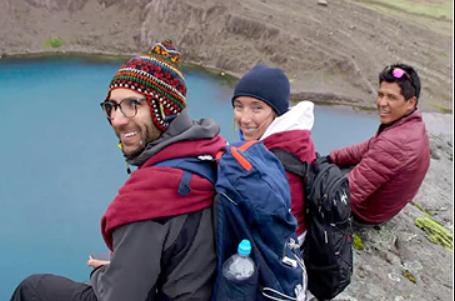
If we observe early symptoms, our first response is usually pacing adjustment.
During a rainbow mountain ascent, we may introduce shorter walking intervals with controlled micro-rests. Slowing the rhythm often stabilizes breathing and reduces discomfort.
On moderate routes like a sacred valley tour, we can extend breaks between sites to allow recovery.
If symptoms persist despite pacing changes, we consider descent. Protecting health always takes priority over reaching a viewpoint.
Monitoring on Machu Picchu Programs
Although Machu Picchu sits lower than Rainbow Mountain, altitude still plays a role, especially for guests coming directly from high-elevation hikes.
During a Machu Picchu Trip From Cusco, particularly on a Machu Picchu day trip, we observe how guests respond to stair climbing within the archaeological site.
For combined itineraries that include a Machu Picchu tour by train followed by high-altitude treks, we evaluate recovery between segments carefully.
Our affordable Machu Picchu tours and full trip to Machu Picchu programs are structured to avoid stacking high-intensity days without recovery.
Travel with Confidence at High Elevation
Exploring the Andes should feel empowering, not uncertain. When you join us for a Rainbow Mountain adventure, a challenging trek, or a comprehensive Machu Picchu package tour, you are supported by guides trained to monitor altitude stress proactively.
Contact Rainbow Mountain Expeditions today and let us guide you with expertise and care. At altitude, preparation and observation make all the difference. With the right team, you can focus on the experience while we focus on your safety.