
Without a doubt, June is one of the best months to visit the majestic Inca city of Cusco. During this month, the city displays all its cultural and spiritual splendor: The streets are filled with music, dance, devotion, and profound Andean pride. The June festivals in Cusco are not simple celebrations: they are living traditions, legacies of the past that continue to beat strongly in the present.
June: Cusco’s Most Festive Month
June not only marks the beginning of the dry season in the Andes; it is also a sacred month for the people of Cusco, as it marks the celebration of the region’s three most important festivals: the Lord of Qoyllur Rit’i, Corpus Christi, and Inti Raymi. Each of these celebrations has a profound meaning in the Andean worldview.
What festivals are celebrated in June in Cusco?
Next, we’ll explore in detail the three main celebrations that make June a truly unforgettable month in Cusco. From pilgrimages to sacred mountains, to majestic parades of saints, and live reenactments of the splendor of the Inca Empire, everything comes alive during this magical time in the heart of the Andes.
Lord of Qoyllur Rit’i
In the Cusco region of Peru, the festival of the Lord of Qoyllur Rit’i, one of the most important and venerated Andean deities, is celebrated every year in June, especially in the area of the Sinakara snow-capped mountain, in the province of Quispicanchi.
Although this festival is usually celebrated between late May and early June—according to the lunar calendar—this year the main event is scheduled to take place on June 17.
Pro Tip: Pilgrimages and activities begin on June 14 (or even earlier)|If you plan to attend, we recommend arriving on that date to get the full experience, as the 17th is the central day of the festival and also marks its culmination, so you won’t want to miss it.
Spiritual Significance
The pilgrimage to the Lord of Qoyllur Rit’i is considered one of the largest and most impactful religious events in South America. Every year, thousands of devout people—from children to seniors—undertake this journey with unwavering faith and a deep emotion to encounter the Christ of Qoyllur Rit’i. They brave the extreme cold of the high altitudes and walk approximately 8 kilometers in a display of devotion that unites body, soul, and ancestral Andean tradition.
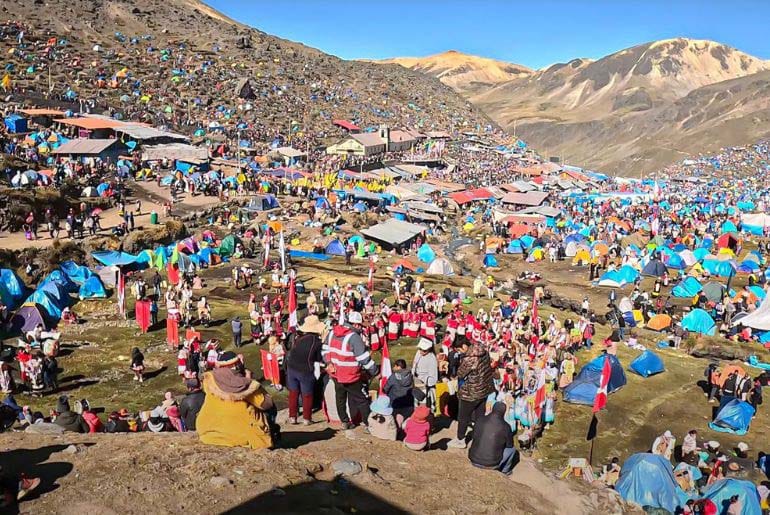
Mystical Experience
This is an experience that everyone should experience at least once in their lifetime. It’s not just about thousands of people walking paths, but rather a profound act of gratitude, homage, and respect.
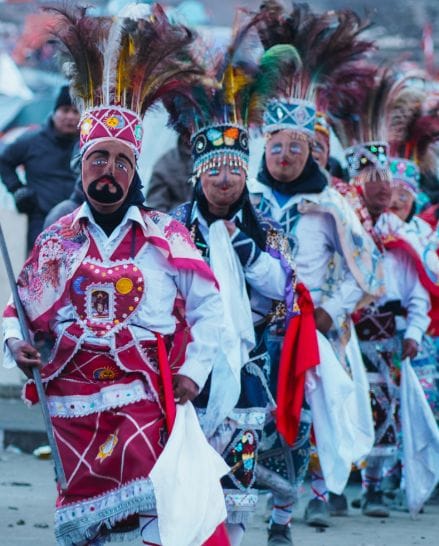 Qhapaq Chunchus
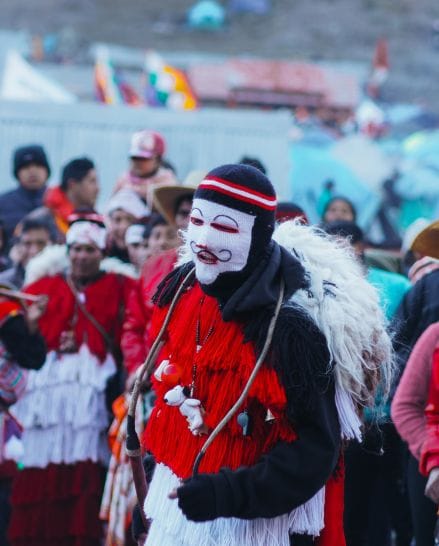 Ukuku
Ukuku
During the festival, various regions of Cusco, known as “comparsas,” participate in traditional dancer costumes such as the “Okukus,” “Chunchu,” “Qhapaq Qollas,” and many more, filling the streets with color, movement, and ancestral spirituality.
Corpus Christi
The Corpus Christi festival in Cusco has roots dating back to Inca times. At that time, ceremonies were held in honor of ancestors and deities such as the Sun God (Taita Inti) and the Moon Goddess (Mama Killa). Around this time, it was common to hold processions with the mummies of the great Inca rulers through the Plaza de Armas, as a symbol of spiritual connection and ancestral continuity.
With the arrival of the Spanish and the imposition of Christianity, these practices were transformed: the mummies were replaced with images of Catholic saints and virgins. Thus was born what we know today as the Corpus Christi festival.
Generally, this celebration takes place after the Lord of Qoyllurit’i and occurs 60 days after Holy Thursday, usually coinciding with the month of June.
Date|The main day of Corpus Christi is June 19th.
Parade of Saints
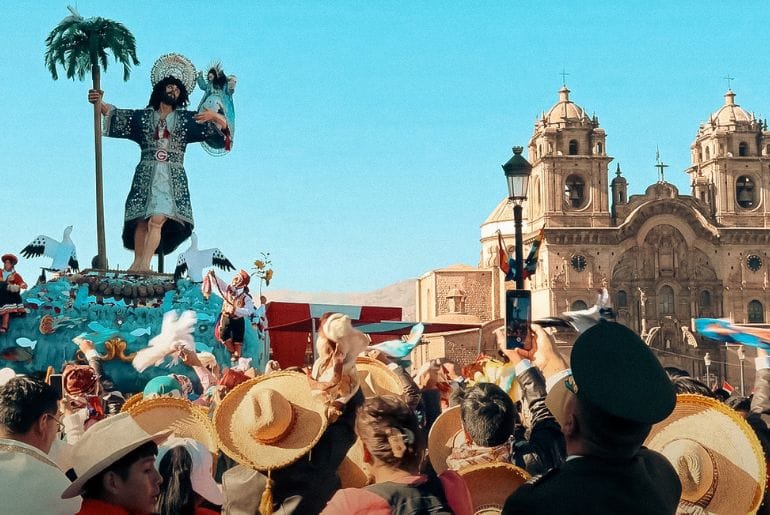
During Corpus Christi, fifteen images of saints and virgins from different parishes in Cusco arrive in a solemn procession to the Cathedral. Each image is accompanied by musicians, traditional dancers, and a crowd of devotees who fill the streets with faith, joy, and tradition. Of course, there’s no shortage of people, who gather enthusiastically to witness this spectacular religious and cultural event.
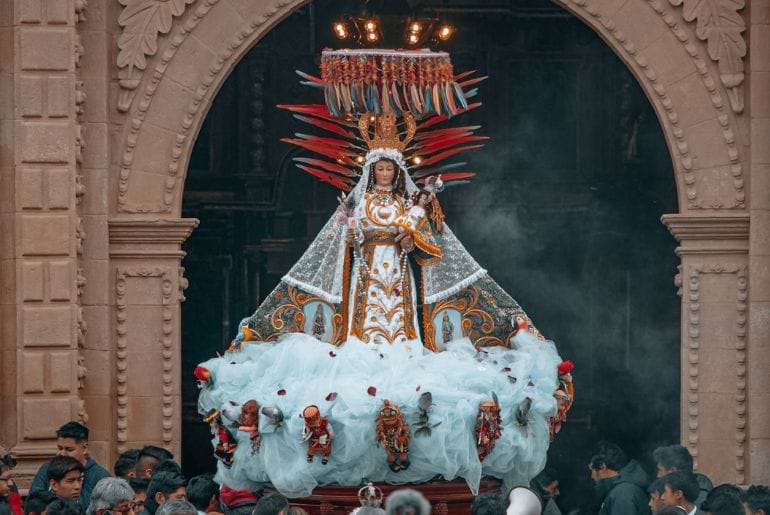
Devotional Competition
Each parish seeks to stand out with the best attire for the saint, the best musical accompaniment, and the largest number of faithful.
Traditional Food
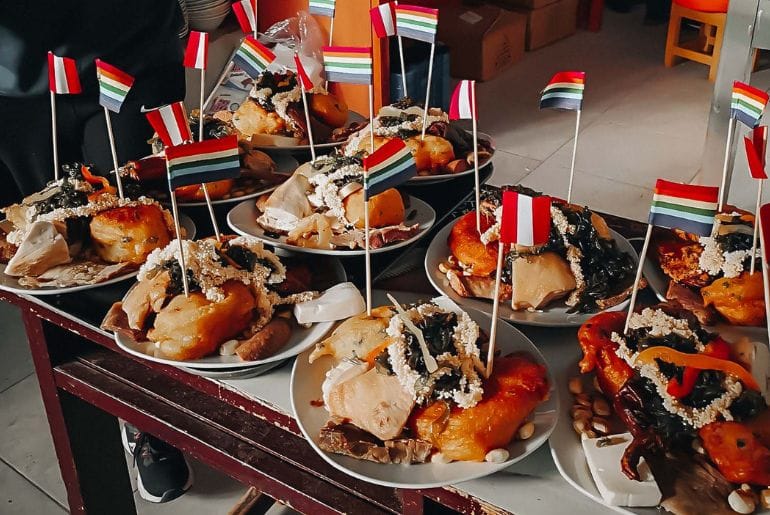
During the Corpus Christi festivity, the emblematic chiri uchu, a cold dish that represents Peru’s culinary richness, cannot be missed. This delicacy combines traditional and native ingredients from the Andean region, such as guinea pig, chicken, chorizo, cheese, toasted corn, seaweed (cochayuyo), and corn tortilla, among others.
Tip|If you want to try the best chiri uchu, head to Plaza San Francisco, located just five minutes from the Plaza de Armas. There you’ll find stalls and groups offering this ancestral delicacy amid a festive and authentic Cusco atmosphere.
Inti Raymi
Origin: Inti Raymi was the most important ritual of the Tahuantinsuyu, celebrated in honor of the sun god, Inti, during the winter solstice. During the Inca Empire, this ceremony took place on June 21st, although it was later officially moved to June 24th, the date on which it is currently celebrated.
Fun Fact:|Every June 24th, in addition to Inti Raymi, San Juan Day and Peasant Day are also commemorated.
Inti Raymi is not just a theatrical representation of the past: it is a living manifestation of Inca pride. Today, it remains one of Peru’s most important cultural events, honoring the richness of its history and reaffirming the deep connection with its ancestors.
Where to watch Inti Raymi?
Inti Raymi is celebrated in three main settings, representing different moments of the ritual and allowing attendees to truly immerse themselves in Inca history.
The ceremony begins at the Qoricancha (Temple of the Sun), where the Sapa Inca offers his first words to the god Inti. The festivities then move to Cusco’s Plaza de Armas, the ancient central plaza of the Tahuantinsuyu, where ancestral dances and rituals are reenacted. Finally, the event culminates in grand splendor on the esplanade of Sacsayhuamán, an imposing ceremonial fortress located on the outskirts of the city.
More than 700 actors bring this performance to life, playing nobles, priests, warriors, and, of course, the central protagonist: the Sapa Inca, a sacred figure who, according to the Andean worldview, had the gift of communicating with the Sun and the stars of the afterlife.
What is celebrated at Inti Raymi?
Inti Raymi is not just a spectacle, it is a profound cultural experience that celebrates the connection between the Andean people and the Sun God (Inti), the source of life and wisdom for the ancient Incas.
Rituals and Ceremonies: The celebration includes ancient rituals such as the ceremonial placement, the offering of chicha (a sacred corn drink), and the symbolic sacrifice of a llama, which in ancient times was seen as a form of communication with the gods.
Dance and Theater: During Inti Raymi, traditional dances and a dramatization honoring the Sun are performed, accompanied by traditional music that fills the atmosphere with energy and color.
Historical Reenactment: The main ceremony in Sacsayhuamán is an impressive recreation of the original rituals of the Inca Empire. Actors and actresses bring to life characters such as the Sapa Inca, the coya, priests, and warriors, restoring the splendor of the Tahuantinsuyu for a few hours.
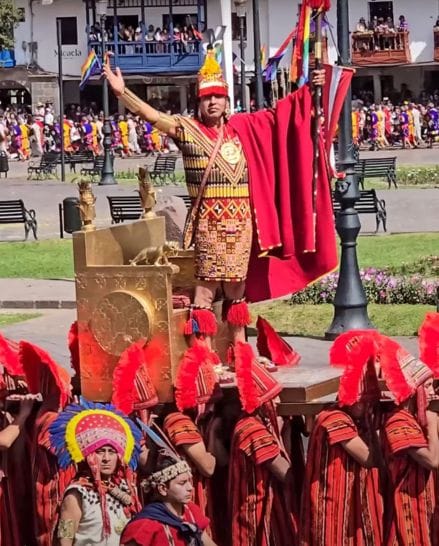 The Sapa Inca leads the Inti Raymi during the June festivals in Cusco.
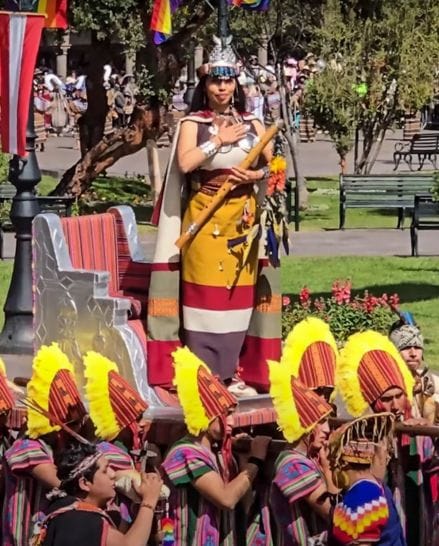 The Coya, queen of the Inca Empire, shines in the June festivals.
Craft and Food Fairs: Starting June 15th, the city of Cusco comes alive with craft fairs, folklore parades, and an explosion of typical Cusco cuisine flavors. A perfect opportunity to try roasted or baked guinea pig!
Inti Raymi Tickets
The Inti Raymi celebration is largely free and can be enjoyed by anyone in public spaces such as the Qoricancha and the Plaza de Armas in Cusco. However, to witness the main event on the Sacsayhuamán esplanade, from the preferred areas, an entrance fee is required.
The good news is that this ticket guarantees you an unparalleled cultural experience, with privileged views of the performance, comfort, and total immersion in the magic of this ancient ceremony.
2025 Ticket Sales
You can purchase your tickets for Inti Raymi 2025 through Teleticket, a Peruvian company specializing in ticket sales for cultural events.
Attention! Currently, there are only a few spots available, so if you plan to experience this unique experience from a prime location in Sacsayhuamán, we recommend securing your ticket as soon as possible.
Check availability and purchase directly at the following official link:|https://teleticket.com.pe/inti-raymi-2025
Why is June the best month to visit Cusco?
If you’re planning a cultural, spiritual, or simply photogenic trip, these are the reasons why June is the ideal month to experience the magic of Cusco:
Dry weather and blue skies: In June, the rains have already passed and the chance of storms is minimal. This means you won’t have to worry about bad weather and can fully enjoy all the activities you plan during your visit.
Unique festivities: The June festivals in Cusco allow you to see the city at its cultural peak. There is no other month of the year where tradition, spirituality, and popular joy are so active.
An authentic experience: Beyond tourism, these celebrations are moments in which the people of Cusco express their identity, making each event a genuine and emotional experience for visitors.
Frequently Asked Questions about June Festivals in Cusco
When is the best time to visit Cusco in June?
The second half of June is perfect, as it coincides with Corpus Christi, Inti Raymi (June 24), and, on some dates, Qoyllur Riti, according to the lunar calendar.
Do I need tickets to see Inti Raymi?
Yes and no. The main part of Inti Raymi in Sacsayhuamán requires a ticket, especially for reserved seating. However, the ceremonies in Qoricancha and the Plaza de Armas are free and open to the public.
Can I enter Sacsayhuamán with the Cusco Tourist Ticket?
Yes, the Integrated Tourist Ticket includes admission to Sacsayhuamán, but it does not cover the Inti Raymi event on June 24. A specific ticket for that event is required for that day.
Where can I buy tickets to see the Inti Raymi in Sacsayhuamán?
Tickets can be purchased online at official agencies, at authorized ticket offices in Cusco such as Teleticket, or through tour packages that include transportation and a guide.
Can I attend Qoyllur Rit’i without a guide?
It is possible, but not recommended. It is a high-mountain pilgrimage and requires physical preparation, knowledge of the weather, and respect for local rituals. Many agencies offer organized tours.
Where can I eat chiri uchu during Corpus Christi?
In Plaza San Francisco or around the San Pedro Market, where dozens of traditional stalls offer this typical dish only during this time.
What should I wear if I travel to Cusco in June?
Layered clothing: sunny days and cool nights. Don’t forget sunscreen, a hat, waterproof clothing just in case, and comfortable walking shoes.
Are there many people in Cusco during June?
Yes. It is high season, both due to the weather and the June festivals in Cusco. It is recommended to book accommodations and tours in advance.
Are these religious or tourist holidays?
Both. They hold deep meaning for locals, but are also open to visitors. Participation is required with respect, especially during Qoyllur Riti and Corpus Christi.
What is the difference between Inti Raymi and Qoyllur Rit’i?
Inti Raymi is a theatrical reenactment of an Inca ceremony in downtown Cusco. Qoyllur Riti is an active, spiritual pilgrimage that blends Catholicism with Andean beliefs and is celebrated in a natural setting.
Are there other festivals celebrated in June in Cusco?
Yes, June is considered Cusco’s Jubilee Month, so there are parades, dances, concerts, and activities almost every day, especially in the Plaza de Armas.
Where are the best places to see these festivities?
- Qoricancha and Plaza de Armas for Inti Raymi and Corpus Christi.
- Plaza San Francisco for traditional cuisine.
- Mahuayani (Quispicanchi) for experiencing Qoyllur Rit’i, if you’re looking for a mystical adventure.
Are photos allowed during Inti Raymi and other festivities?
Yes, but please be respectful. At Inti Raymi, especially in Sacsayhuamán, you can take excellent photos if you have a ticket. At Corpus Christi and Qoyllur Riti, too, but please avoid interfering with the rituals or blocking participants’ paths.
How accessible is the Qoyllur Rit’i site?
The Sinakara sanctuary is over 4,000 meters above sea level and requires a demanding hike from Mahuayani. It is not recommended for people with reduced mobility or health problems. If you go, be well prepared and acclimatize beforehand.
Where can I find official information about the festival calendar?
You can check the official website of the Regional Directorate of Culture of Cusco or visit the iPerú offices in the historic center. Hotels also often have posters or brochures with the main events.
Related Posts:
Things to Do in Cusco for Adventure Lovers
The Most Important Festivities in Cusco
Cusco Tourist Ticket Explained (Boleto Turístico)
The Best Time to Visit Cusco, Peru
The Most Instagrammable Spots in Cusco